
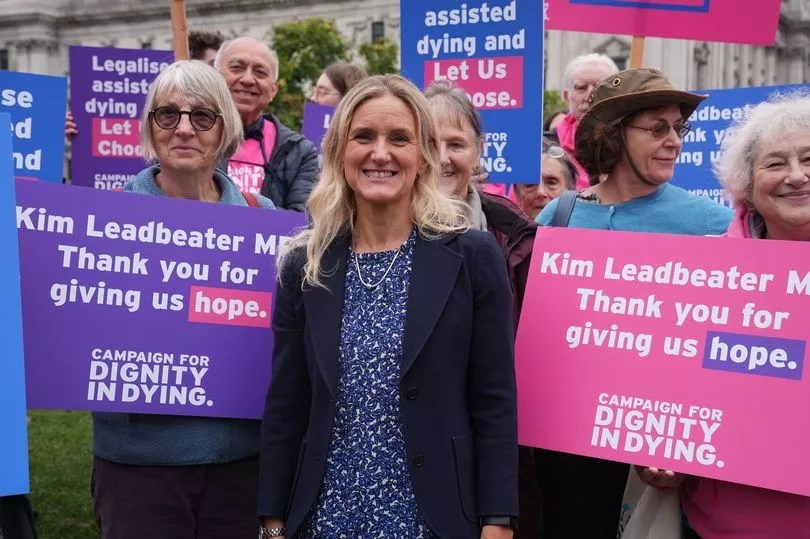
On November 29th, MPs will debate the Terminally Ill (End of Life) Bill, put to Parliament by the Labour MP Kim Leadbeater. If passed, it would legally empower people with terminal diseases to consent to ‘medical assistance in dying’, or to use the much older and more common term, euthanasia.
Wes Streeting, the Health Secretary, has already made public his opposition to the bill, has indicated that he would vote against it and that the NHS would be in the frame to pay for any euthanasia administered to terminally-ill people under the terms of the bill should it become law. Leadbetter’s Private Member’s Bill provides that a high court judge would have the final decision on whether the euthanasia will go ahead. Sir James Munby, a senior retired judge, said that it was not the ”proper function” of a judge to make such a decision, a principled that was evidenced in the case of Keira Bell, a woman who had gone through gender reassignment surgery but claimed that she had not been able to make a suitably informed decision on the full effects of her treatment, which included puberty blockers.
Keira won her case at the High Court, however this was overturned at the Court of Appeal where three judges ruled that the court was ‘inappropriate’ in issuing guidance to refer cases of 16 or 17 year olds who wished to pursue treatment with puberty blockers to court. In essence, they ruled that medical decisions should not be taken by judges, but medical practitioners. Yet that principle has been conveniently set to one side In Leadbetter’s bill.
There are some 200 million people already living in countries which have some form of legalised euthanasia, including most notably Switzerland (whose Dignitas organisation has been used by British individuals to end their lives), but also Belgium, the Netherlands and Luxembourg, with Canada recently adding their name to the list. The case in favour of euthanasia is a simple one: That individuals, suffering from severe medical conditions for which there is no cure and which cause great pain and suffering, should be entitled to receive assistance, either from medical professionals or a close family member, to end their lives. In and of itself, this doesn’t seem to be either a controversial or unreasonable demand, certainly when looking at individual cases.
Diane Pretty
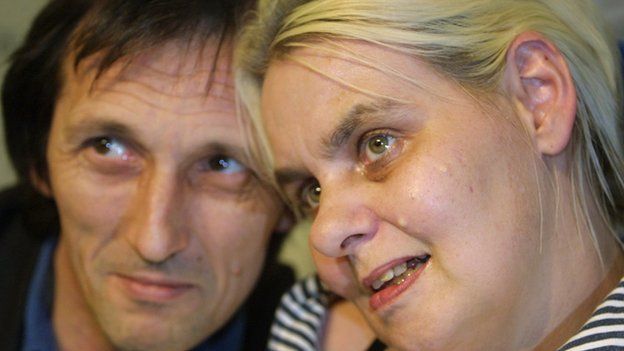
A notable case in the euthanasia debate which has gone back decades was that of Diane Pretty, a mother of two who contracted Motor Neurone Disease – a terminal illness of many variants which causes severe muscle weakness which worsens over time, but does not cause sensory loss. Essentially, a person with MND eventually becomes trapped inside their own body.
Diane, knowing that her condition was worsening and terminal, having to be fed through a tube and unable to speak as result of the disease, went to court to fight for her right to end her own life. She stated in her claim that her deep fear of choking and asphyxia, which become manifestations of the disease in its later stages, meant that she should be able to consent to ending her own life and, given her inability to end her life on her own, that her husband, Brian, should be legally indemnified against any charges were he to assist in his wife’s death. Diane, undeterred by her defeats in courts in Britain, pursued her case all the way to the European Court of Human Rights in 2002, where she lost her case again. Diane died in a hospice later that year, aged 43.
In and of itself, it would be very difficult, at least on a human level, to make a case against Diane Pretty’s position. Her disease was well advanced and had left her unable to communicate, completely immobile and needing a tube to feed her. Her suffering was severe and obvious. In her own mind, her life was effectively over, but her suffering would continue until the disease finally took her on its own terms. Motor Neurone Disease is a terrible affliction and one which has come up frequently in case studies in the debate over euthanasia, given the awful toll it takes on those who contract the disease and that the only medical interventions available alleviate the effects of the disease, as there is no known cure.
If we really lived in a strongly human-orientated society, like a socialist society, then it is arguable that a case like that of of Diane Pretty’s would not have needed to go through the entire British and European court system to obtain what she wanted for herself. But, given that we don’t live in a human-orientated or socialist society, we must examine euthanasia not only in the context of human tragedies like that which befell Diane Pretty, but in the wider context of our capitalist society, the bourgeois ideology which capitalism produces and reproduces and the needs of capital itself. When examined in that context, the compelling argument is against euthanasia.
In examining the application of human euthanasia in a 2024 capitalist world, one has to consider what benefits the ruling class, our oppressors, would gain from the proliferation of euthanasia in human beings. We should also consider whether those entrusted with administering euthanasia should indeed be trusted to do so, given the potential pressures that can and will be brought to bear on them beyond that of simply ending the suffering of an ill patient.
One case which should raise serious concerns was that of Amir Farsoud, a 54-year old Canadian disabled man who found himself homeless when the house he rented with two other people was put up for sale. Without the money to find a place to live of his own, he decided to put himself forward for ‘Medical Assistance in Dying’ – a euphemism for euthanasia. The story made headlines all over the world and raised the question of when and in exactly what circumstances is euthanasia deemed an appropriate response – while terminally ill people who are experiencing great suffering are, in and of themselves, open and shut cases, the fact remains that, within months of Canada introducing laws to allow euthanasia, a man put himself forward to be effectively put down because he was poor and homeless.
One question which leads on from this is: If an individual can put himself forward to be euthanised for being poor and homeless, could a state persuade poor and homeless people to end their own lives in the same manner? In fact, are they doing so already? As it was, Farsoud was spared by a crowdfunder which raised over $60,000 for him. We can speculate as to whether he would have gone through with his decision to end his own life, or whether a doctor would have administered the drugs to do so, but the fact that someone finding themselves in severe financial strife felt that they had no alternative but to die reflects shamefully on a capitalist system which has long-since abandoned people like Amir Farsoud.
The legalisation of euthanasia in Britain may seem on its face to be a well-meaning act of kindness to people experiencing extraordinary suffering, however it would also represent the beginning of a new epoch, that being that individuals can legally and with medical assistance end their own lives. What begins with euthanising the seriously ill and dying will potentially become the ending of the lives of the poor, the homeless and the desperate, as we saw (or at least potentially saw) in Canada. It becomes the euthanasia of people whose illnesses aren’t terminal or for which suffering is not considerable, but whose medical care becomes prohibitively expensive or of excessive duration for the state to countenance. If we offer people a legal exit door, it will be inevitable that more people than we expect would look to walk through it and for reasons that we did not consider. It would also be inevitable that, sooner or later, the state would want to push us through that same door, too.
Another argument in support of euthanasia in humans involves animals, specifically pets. Anyone who has owned a pet dog or cat may well have experienced the torment of seeing their beloved pet suffer, particularly as they get older, and are faced with the choice of prolonging their suffering or taking the decision to end their life by having them euthanised. We wouldn’t put a pet through unnecessary suffering, it is said, so why would we put a wife, or husband, or a son or daughter through that? However, ending the suffering of a pet when they are ill and suffering is a responsibility bestowed on every pet owner – even if they were not conscious of it when they first became one. The unfortunate truth is that the state has far less interest in ending your pet’s life early as it does in ending yours if you become too tiresome a burden on it.
To use a well-coined phrase: “The road to hell is paved with good intentions”. It is inconceivable that anyone who advocates for euthanasia, or medical assistance in dying or however they may wish to call it, is doing so in the belief that they are crossing the Rubicon, or condemning the poor and the inconveniently ill to an early grave so that the state can neatly solve its self-created problems. But as a former advocate of euthanasia in the past, that is now exactly what I fear, and that is precisely why I oppose it.

 The Middle Aged Revolutionary
Leave a comment