
September 2024 saw the limited cinematic release in the United States of the documentary ‘Am I Racist?’, the second film presented by conservative commentator Matt Walsh of Daily Wire. Walsh’s first film, ‘What is a Woman?’ tackled the testy issue of Gender Identity Ideology and its pernicious effects on children and young women. In ‘Am I Racist?’, Walsh looks at Diversity, Equity and Inclusion
What is DEI?
According to Harvard Business School, which links from its DEI page to a course which costs $1,850 to enrol on, Diversity, Equity and Inclusion contains the following facets:
- Diversity: The presence and participation of individuals with varying backgrounds and perspectives, including those who have been traditionally underrepresented
- Equity: Equal access to opportunities and fair, just, and impartial treatment
- Inclusion: A sense of belonging in an environment where all feel welcomed, accepted, and respected
DEI is an ideology which purports to promote the fair treatment of people, but has drawn criticism for its tendencies towards compelled speech, the oppression of academic freedoms and in particular its imposition in large employers, where it has become a growth industry employing thousands of people to implement policy and deliver training.
A Journey into the World of Diversity, Equity and Inclusion
The film opens with Matt Walsh wearing a wholly unconvincing wig, guest starring on a Utah-based morning show where he encourages the white female presenter to engage in an exercise where she will join Walsh in ‘stretching out of their whiteness’. Walsh makes the point of telling the Asian-descended presenter that they did not have to make too much effort in this exercise, presumably because the stretching away of white guilt was a white-only obligation. Apart from being very funny, the ridiculousness of anyone being able to make yoga poses to stretch their way out of their ethnic group and their legacy of oppression is almost as ridiculous as the woman who blindly participated in it. It becomes clear later in the film that this scene is towards the end of Matt Walsh’s arcing narrative of redemption as a guilty white man, but the early stages of the film includes him sitting down with Kate Slater, the author of The Anti-Racist Roadmap, where she explains the purpose of her work in the field of anti-racism, how the United States was racist to its bones and how it was important for white people to talk to their children about their inherent racism at the earliest possible opportunity, even Walsh’s six month-old daughter.
Walsh’s visit to a bookshop sees the assistant selling him armfuls of books on the topics of white supremacy and anti-racism, including the book White Fragility by Robin DiAngelo, which holds the view that white identity is inherently racist and that white supremacy is born out of the white race’s precarious position at the top of the racial hierarchy, both in the United States and elsewhere. The book’s reviews on Amazon are deeply polarised between those being effusive in their praise of the book and those that think that it’s badly-researched garbage. I haven’t read the book, so will not take a view on it, however I’m aware that it’s something of a foundation text for anyone interested in the phenomenon of white supremacy.
‘Am I Racist’ is a funny film – a much funnier film than I was expecting, certainly given the tone of Matt Walsh’s previous film ‘What is a Woman?’. Watching ‘Am I Racist?’, I found myself reminded of TV programmes like Brass Eye and comedic creations like Sacha Baron Cohen’s Borat, which both were merciless in the manner with which they sent up celebrities (watch the ‘Drugs’ episode of Brass Eye and you’ll see what I mean) and so-called experts with their obtuse questioning, occasional total ignorance and persuading them read completely absurd copy straight into a camera for some fake worthy cause. The film is pock-marked with some very funny scenes, including when Walsh was thrown out of a DEI workshop when it was discovered who he really was (he initially pretended that his name was Steven) having repeatedly embarrassed himself throughout and with his fellow attendees confessing to feeling ‘cringe’ when they hear the term ‘white people’ and that they felt uncomfortable being in the same room as Walsh once they’d realised who he was.
A Metamorphosis
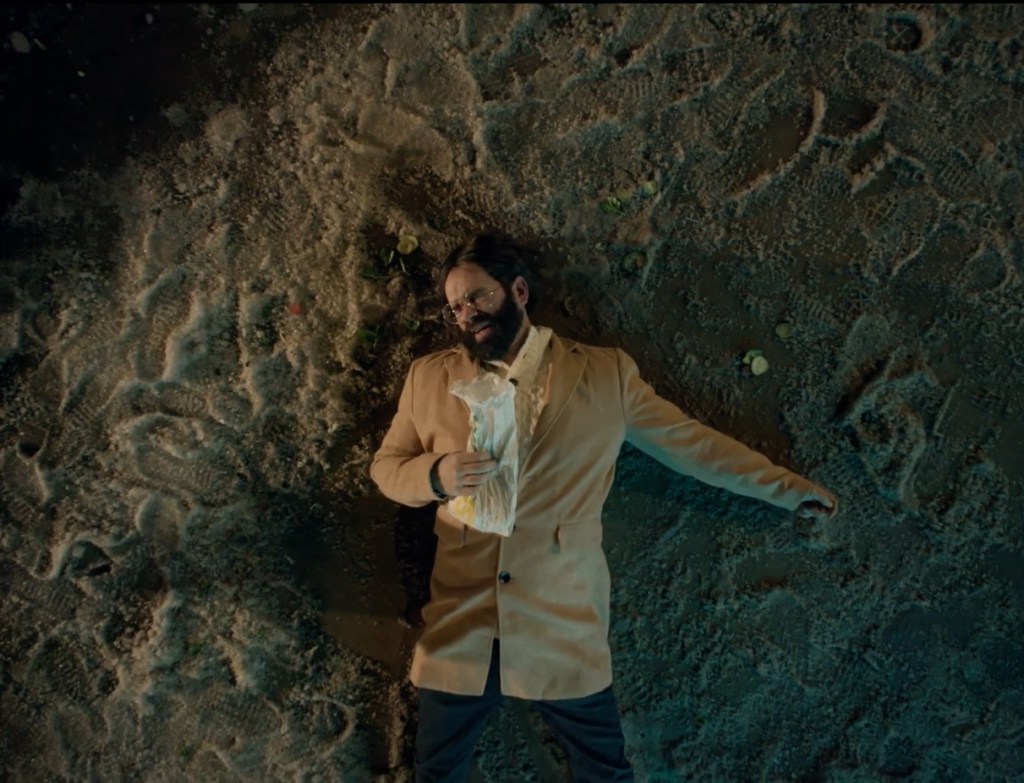
Walsh’s dramatic transformation from a man with a beard to a man with a beard and long hair is also funny and wholly unconvincing in equal measure. In fact, it’s that his disguise is so bad that adds to the humour of the spectacle. Walsh’s participation in a $30 online DEI course, which awards him for his participation with a card which he cannot help but flash to anyone who cares to look is also a joy to behold. Another very funny moment is Walsh’s reenactment, alongside the victim’s account in his own words, of the attack on actor Jussie Smollett in the early hours of a January morning in 2019, an attack which turned out to be a complete hoax and for which Smollett was indicted by a Grand Jury, had his charges dropped, was independently investigated then indicted again and eventually found guilty of five out of six charges against him, resulting in Smollett being sentenced to 150 days in jail and ordered to pay restitution and fines totalling $145,000. Smollett continues to protest his innocence.
The film also goes to great pains to be completely open and transparent with regard to the fees that the producers had to lay out to secure the contributions of people including Sarra Tekola PhD, the founder of Phoenix Black Lives Matter, who was paid $1,500 for her appearance, said ‘cognitive dissidence’ when she meant ‘cognitive dissonance’ and then waffled on for some time about decolonisation, a topic which she appeared to know very little about. Meanwhile, Regina Jackson and Sara Rao will charge middle class and middle-aged women (only women are permitted to apply) $5,000 to join them for a boozy lunch, where the topic of conversation is how foul and repugnant the United States is and how it should be burned to the ground.
The most eyebrow-raising example of the fees demanded by contributors was that of Jodi Brown, the mother of two black children which she claimed were shunned in an intentional racist act by a person dressed up as ‘Rosita’, a Sesame Street character at the Sesame Place theme park in Philadelphia in 2022. Brown agreed to an interview on the payment of a fee of $50,000, which seemed something of a waste of money given the brevity of the section in which she appeared, though I suspect that the producers got their money’s worth by exposing the fee that Brown demanded rather than anything that she had to say.

The film identifies that there were stark similarities between the reactions of the political class, the media and academia to the incidents involving Jussie Smollett and Jodi Brown’s two children – in both cases the same people took the same opportunities to put themselves in front of cameras to signify these incidents as examples of the systemic racism which plagues the United States and how there would be no peace without justice. What is notable is that the same liberal class failed, to a man and woman, to say anything when Mr Smollett was subsequently charged with felonies totalling six offences related to his false allegations of a racially-motivated attack. It could be argued that, for these elites, the media exposure in the aftermath of the incident is enough.
Reparations
Arguably the crowning scene of the film is the interview that Walsh manages to secure with Robin DiAngelo, at a cost of $15,000, to discuss patriarchy and white supremacy. Towards the end of the interview, Walsh invites his cameraman Ben, who is black, to take reparations in cash from his wallet and asks DiAngelo is she would do the same. She goes to her handbag and hands Ben $30, saying that it was a little weird that they were giving Ben his reparations in cash and that her idea of reparations should be more systemic than people handing money to each other, but Walsh stated that he wasn’t going to wait for the process to catch up with the demands for reparations and that he was going to start the process himself.

The latter stage of the film shows Walsh hosting his own DEI-orientated workshop, where he hopes to build anti-racist ‘allyship’ by asking the people in the room who they think is the most racist. His question immediately causes two participants to walk out, while more people walked out when Walsh’s workshop (entitled the ‘Do the Work’ Workshop) are invited to self-flagellate with a selection of weapons, including whips and paddles. Sandwiched in between is a scene where Walsh shows a chart entitled ‘Racism is Non-Binary’, which features a sliding scale from 0 to 10 in terms of racism accompanied by cartoon drawings of Rachel Dolezal, Abraham Lincoln, Donald Trump and a Knight of the Ku Kux Klan.
The subject that ‘Am I Racist’ tackles, albeit in a light-hearted and at times very funny way, is Diversity, Equity and Inclusion: An ideology that, in most small employers at least, has absolutely no traction whatsoever, but in larger employers is not only extremely pervasive, it’s almost become an industry in and of itself. Putting aside the fact that there are people who will charge thousands of dollars to facilitate courses and events on the subject of DEI, online courses cost as little as £15 to complete and are available to anyone who chooses to take part in them. People in large employers across the United States and Great Britain are earning handsome salaries solely to promote DEI in their workplaces.
It seems to be no accident that the proliferation of ideologies like those espoused by people like Ibram X Kendi and Robin DiAngelo post-date the financial crash of 2008: The fact that late-stage capitalism is now predicated so heavily on the creation of profit from nothing and is, with every passing day, becoming more and more just a make-work scheme means that Diversity, Equity and Inclusion is not just a set of principles to help people to be nicer to each other, it’s big business and is extremely lucrative for those most closely aligned with it. In fact, those most vociferous in their proclamations about white supremacy and inherent racism are those with the greatest vested interest in preserving that racism because it’s the foundation upon which their wealth, their media presence and their influence are built.
‘Am I Racist?’ reveals that the United States and the attitudes of the people living there towards race varies starkly across class lines: The guilt-ridden white middle-class types who felt that they should prostrate themselves before black people begging for forgiveness for the actions of their ancestors on the one hand to the working-class folk gathered at the biker bar who are far less bothered by the colour of someone’s skin than by how good or bad a person they are. The message of the film is certainly far more subtle than some of the content which Daily Wire produces. Instead of claiming that there is no racism at all in America, ‘Am I Racist?’ demonstrates that politicians, media talking heads and so-called experts on the inherent racism in their country are fundamentally of same class and world outlook as those who would willingly pay to attend a DEI course, to find both racism and white supremacy in everything and everybody, to wish that their country would burn to the ground and, most crucially, to shun the people who drink in biker bars and judge people by nothing more than the content of their character.
‘Am I Racist?’ is available on Daily Wire+
 The Middle Aged Revolutionary
Leave a comment