
The Labour party, to add to its growing list of non-policies with which it believes it can tempt an unsuspecting electorate to vote for them, in April released a five-point plan to revitalise the ailing high street of Britain. Labour rather disingenuously blame the Tories for the decline in our high streets, which seems to disregard the fact that high streets have been in decline for years, and that includes the period where Labour was last in Government.
Lest we forget that Woolworths, an icon of the high street which had been in existence for 100 years, went bust on Labour’s watch in 2009 while Gordon Brown and his rotten stooges in Government looked the other way. This came months after the same Government mortgaged the nation up to the eyeballs bailing out profligate banking groups including Royal Bank of Scotland and HBOS. It’s clear that, at least based on the evidence of history, Labour is no more a friend of the high street than the Tories are.
Labour’s plan appears to put the rampant rise of shoplifting as a major reason for the decline of our high streets, which on its face seems strange but reveals that the Labour party will always gravitate towards questions of law and order because it believes that this is an area in which it can distinguish themselves from the Tories. Given that there are precious few areas where Labour can do this, it is entirely understandable why they would place this at the top of their list of actions.
It is certainly true that major companies have abandoned the high street, and there is evidence that crime can and does influence these companies in closing their shutters and leaving localities for good, though at this stage the evidence for this phenomenon seems to be coming more from the United States than Britain. That said, shoplifting from shops in Britain is at record levels and rising and, in the case of the larger store chains, will arguably be a factor should individual locations be appraised for their future viability. In short, if there’s a choice between keeping one of two stores open, it will be the one where the stock doesn’t get nicked which will remain open.
John Lewis and Waitrose have been bold enough to claim that they believe that the unbridled thievery that they have been hapless victims of is based on pure avarice rather than desperate and hungry people. On the basis of the evidence available through social media, there is at least some truth to this: Videos of active shoplifters will show them avoiding the bread and milk aisles and instead stealing cigarettes, alcohol and heavily-salted snack treats, which belies the argument made by the liberal left that poor people are driven into crime. There’s a very good reason why razor blades are contained in rigid plastic boxes on shelves and why some shops now will not stock meat in their fridges, but instead leave pictures of steaks and lamb chops while directing you to enquire with a member of staff if you want them.
It seems that the staff of these stores are instructed not to challenge shoplifters, which seems entirely reasonable given the paltry wages these people are paid and the fact that the stores themselves will fold the losses that they take from shoplifting into the huge turnover that these places generate. That said, watching two men walking out of a Tesco Express with armfuls of trays of Ferrero Rocher (as I have) at 8.00 in the morning leaves a lasting impression that these places aren’t entirely safe to visit and do one’s shopping. Labour’s proposal that they will increase the number of police officers and plastic police officers (also known as Police Community Support Officers) won’t in an of itself stop shoplifting: The police have consistently shown themselves to be somewhat shy at enforcing certain laws while enthusiastically enforcing others, including enforcing laws which aren’t even laws at all.
The police across Britain have been hollowed out by years of funding and staffing cuts, demoralised by Governments of both colours undermining their authority and by persistently lowering entry standards for new officers. New police officers cannot be magicked into existence; faith in the service has to be restored, not only to regain the implied consent of the public, but to make them a viable option for anyone embarking on a new career. It is extremely doubtful that new police officers will be recruited or, even if they are, that shoplifting can and will be tacked as a result.
Labour’s second point for action is to restore banking to our high streets. They say that: “Thriving high streets need banking services for local businesses and customers. Labour will roll out banking hubs to guarantee face-to-face banking in every community boosting local high streets and shops. The cost of opening and operating the hubs will be met collectively by the banks”. People who have been concerned by the seemingly inexorable decline of the high street will have seen the decline of banking hubs as part of the problem, not necessarily as a root cause of it. The deep flaw in this stage of Labour’s grand plan is contained in the final sentence: “The cost of opening and operating the hubs will be met collectively by the banks”.
The banks have been on a programme of shutting down its high street branches for years, and this has not been halted by the Government. The proliferation of smartphones and the ability of people to bank through them, as well as banks withdrawing many services that their branches could perform has left people with little alternative but to bank through their phone. It’s possible to deposit a cheque, pay bills, even arrange a new fixed term on a mortgage on a phone. The idea that the Government could compel huge corporations to re-open their old branches on high streets AND any for them as well is the stuff of fantasy. If it was to happen at all, it would need the Government to at least underwrite it in some fashion, which while it may restore branches to high streets again, it would be the state absorbing the costs with the banks continuing to make their rampant profits.
Labour’s third point is to replace business rates. Whilst it is true that business rates are currently stacked heavily against physical stores versus online ones, Labour’s two alternatives are to shift the tax burden onto online stores or to simply reduce the tax burden on physical stores. Either option creates their own problems – if the Government cuts taxes for physical businesses, then it will need to find a way to backfill the portion of these taxes which goes to local authorities, already cut to the quick by years of austerity, as outlined in these articles on Warrington and Nottingham. If they shift the tax burden onto online stores, then it is conceivable that many stores will close, given how incredibly tight their margins already are.
Distinction should be made between the struggles of small businesses and those of larger ones. Whatever reforms that are made of business taxation, relief should be given to small businesses in high street locations. With the number of major retailers dwindling with closure of BHS, Debenhams, Wilko, Woolworths and others, smaller retailers, who rely to a degree on the presence of larger businesses for their footfall, have almost no incentive to set up businesses in places where large premises have been unoccupied and will in all likelihood never be occupied in the future. Marks & Spencer has been closing their high street stores for years as they move to out of town locations which offer greater floor space and free parking. They realised that the future of their business is not on the high street and, of their ten largest stores, only two are in high street locations – their largest store is in Oxford Street in London and the other is in Newcastle City Centre.

Labour’s fourth pillar in their grand plan is to ‘stamp out’ late payments. Anyone who has been involved in business to any degree will be aware of the issues that exist with regard to the last payment of invoices: I’m familiar with the workings of a wholesale meat company that was routinely stung by restaurants for their invoices, often for months. The problem is that the non-payment of invoices is, at least by some, viewed as a legitimate business practice, particularly if the business ignoring the invoice is bigger than the one issuing it. Michael Heseltine, former Deputy Prime Minister, once said that holding back on invoice payments was legitimate and indeed he had done it to protect his own business.
New laws are worthless if there is nobody to enforce it. A small supply company being held to ransom by one of its customers can’t simply call the police when their invoices aren’t being paid: They would have to resort to the court system and, even with new laws written into statute, it would take months and cost considerable amounts of money for businesses to receive relief, by which time the business has either gone under or the errant company has eventually paid their bill. Non-payment of invoices is part of a bigger culture, which is that every penny is better in the hands of a business than it is anywhere else; be that its staff, suppliers or anyone else. No law in the world could change that culture.
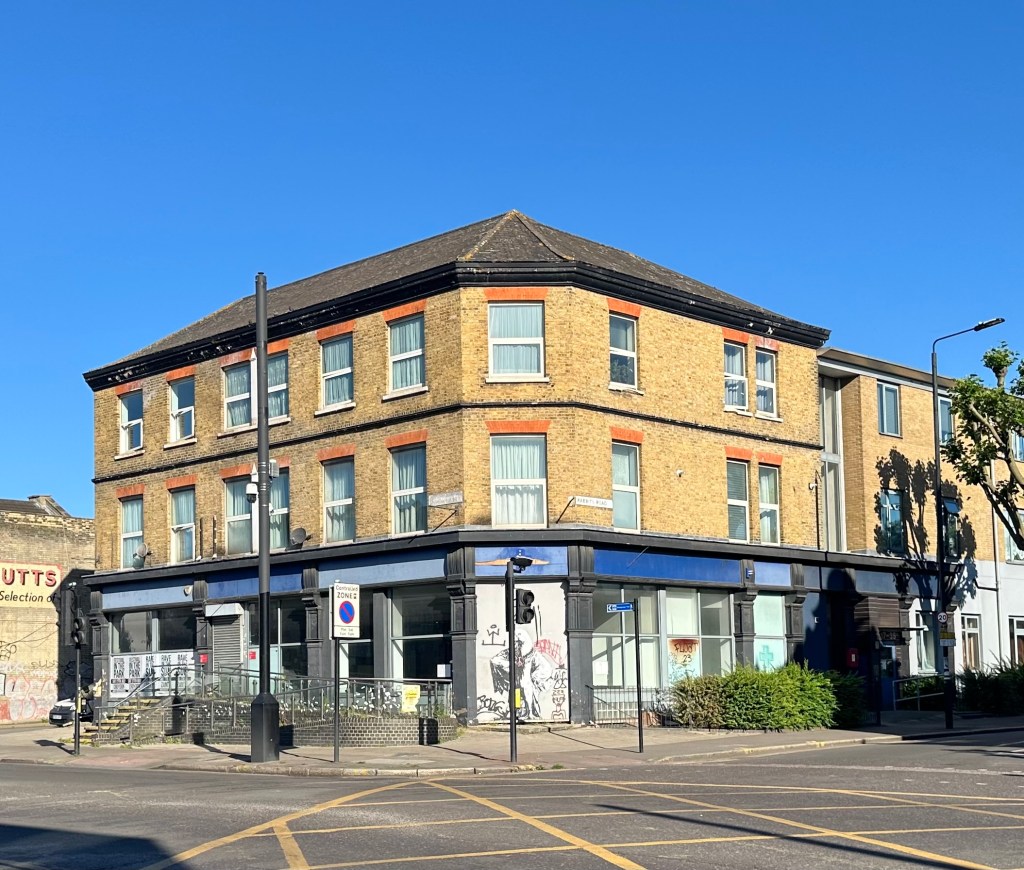
Labour’s final ‘pledge’ is to revamp Britain’s empty shops, pubs and community spaces. It is true that no town centre of high street benefits from rows of empty premises, covered in bill stickers and graffiti. The problem is that there isn’t exactly a wealth of options open to anyone wishing to redevelop an empty premises – as I said before, there are very few major high street retailers in 2024 and those that there are have left the high street or will do so soon. In fact, the only realistic option for the re-appropriation of abandoned premises is for residential purposes.

Labour promises to revamp the right to buy what it calls ‘beloved community assets’ and repurpose them, but unless it is for residential purposes then it is extremely difficult to conceive of what else they could become instead. It would also not solve one of the fundamental problems of town centre and high street locations: That parking is prohibitively expensive. As council funding has been pared back by years of austerity, councils have had to use revenue streams like car parking to fill the breach. Local schemes, like cutting the price for parking on Saturday afternoons, have been scrapped as prices have been jacked up and local businesses have suffered. Whether we like it or not, town centres rely on people, most of whom arrive in their cars, for their survival.
Out of town retail parks may be sucking the life out of town centres, but they are convenient and have free parking. Local council’s short-sightedness has also been part of a number of factors which have helped to decimate our high streets: For instance in Seaton, East Devon, the council gave permission for a huge Tesco store and housing development to be built on the east side of the town near the River Axe. Since the development, the two local Co-op supermarkets and the Boots store have closed down, while the remaining businesses are struggling against the retail behemoth plonked just minutes from where they are located. The councillors which voted to push this through must have known what the result of this development would be and, frankly, didn’t give a stuff about it.
At the risk of sounding pessimistic, it seems that there is no hope for the high street under the capitalist system, Labour plan or no Labour plan. Whatever system we live under, we will need the basic necessities of life and will often travel to a place of supply to get them , being it a corner shop, a high street or an out-of-town sprawl. Capitalism offers no answers to the problems which beset the high street, the primacy of profit means that, where a penny more can be made somewhere other than the high street, then that is where business will go. A planned economy, where the profit motive is removed, would mean that people could go to their high street and find shops providing quality good at reasonable prices, rather than whitewashed windows and ‘to let’ signs.
 The Middle Aged Revolutionary
Leave a comment